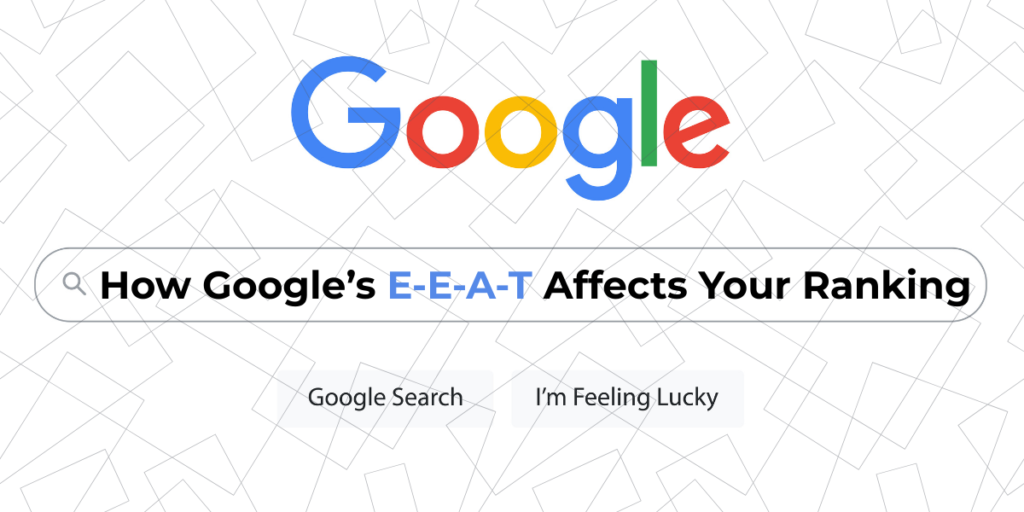
Google E-E-A-T is one of the most talked-about concepts in SEO today, yet also one of the most misunderstood.
If you’ve been doing SEO for even a little while, you’ve probably heard this term floating around everywhere lately — E-E-A-T.
Some people talk about it like it’s a magic ranking factor.
Others say, “Arre, it’s just theory, content is king.”
Honestly? Both are wrong.
From what I’ve personally seen working with websites, blogs, local businesses, and even service-based brands — E-E-A-T doesn’t rank your website directly, but it decides whether Google trusts you enough to rank you at all.
And trust, in today’s SEO world, is everything.
Let me break this down in the simplest way possible, with real-life examples — no boring textbook talk.
Table of Contents
First, What Exactly Is Google E-E-A-T?
Google’s E-E-A-T stands for:
- Experience
- Expertise
- Authoritativeness
- Trustworthiness
Earlier it was just E-A-T. Google added another “E” for Experience, and that change tells us a LOT about how search has evolved.
Google is no longer asking only:
“Does this person know about the topic?”
Now it’s also asking:
“Has this person actually done this in real life?”
That’s a massive shift.
1. Experience: “Have You Actually Been There?”
This is the newest and most misunderstood part.
Real-Life Example
Imagine searching:
“Best phone under ₹20,000”
You click two blogs.
Blog A:
- Lists specs copied from Amazon
- Generic sentences like “good battery backup”
- No photos, no personal insight
Blog B:
- Says: “I used this phone for 30 days”
- Mentions heating issue while gaming
- Talks about camera performance at night
- Includes real screenshots or photos
Which one do you trust more?
Exactly.
That’s Experience.
Google is actively trying to understand:
- Did this person actually use the product?
- Did they face real problems?
- Are they sharing first-hand insights?
SEO Impact
Websites that:
- Share personal use cases
- Show behind-the-scenes
- Use phrases like “In my experience”, “When I tried”, “What I noticed after 7 days”
Tend to survive Google updates better, even if their content isn’t “perfectly optimized”.
2. Expertise: “Do You Know What You’re Talking About?”
Experience is about doing.
Expertise is about knowing.
You can experience something once, but expertise comes from depth.
Simple Example
Let’s say someone writes:
“How to Run Google Ads”
Expert Article:
- Explains keyword match types
- Talks about Quality Score
- Mentions CPC, ROAS, conversion tracking
- Gives examples of campaigns failing and improving
Non-Expert Article:
- “Google Ads is good for business”
- “Set budget and run ads”
- No depth, no strategy
Google’s systems can detect:
- Shallow explanations
- Rewritten content
- Lack of topic coverage
POV Truth
I’ve seen websites with lower backlinks outrank “big blogs” just because their content was written by someone who clearly understands the subject deeply.
Expertise shows through:
- Clear explanations
- Logical structure
- Correct terminology
- Anticipating reader doubts
3. Authoritativeness: “Do Others Recognize You?”
This is where many people panic and think:
“Oh, I need Forbes backlinks now.”
Not exactly.
Authoritativeness is relative.
Real-Life Analogy
In your society:
- One person is known as the mobile repair guy
- Another is known as the CA
- Another is the fitness trainer
Google works the same way.
For example:
- A local dentist doesn’t need Wikipedia
- But Google expects:
- Clinic website
- Google Business Profile
- Reviews
- Mentions on health directories
That builds authority in context.
What Builds Authoritativeness Online?
- Brand mentions (even without links)
- Reviews (Google, Practo, Trustpilot, etc.)
- Guest posts on relevant sites
- Consistent niche content
- People searching your brand name
Authority is earned over time, not written in one blog post.
4. Trustworthiness: “Can I Safely Recommend You?”
This is the foundation of everything.
No trust = no ranking.
Simple Example
Imagine two websites selling the same course.
Website A:
- No About Us page
- No contact details
- No refund policy
- Copied testimonials
Website B:
- Clear founder info
- Real photos
- Clear pricing & policies
- HTTPS
- Reviews with names
Which one feels safe?
Google thinks exactly like a cautious user.
Trust Signals Google Looks For
- HTTPS security
- Transparent business info
- About, Contact, Privacy, Terms pages
- Real authors with profiles
- Honest claims (no “#1 in the world” nonsense)
Especially for YMYL niches (Money, Health, Legal), trust is non-negotiable.
How E-E-A-T Actually Affects Rankings (Ground Reality)
Let me be very clear here:
E-E-A-T is not a single ranking factor.
You won’t see:
- “EEAT score = 72”
But here’s what happens:
- Google’s quality systems evaluate content
- Low EEAT = content filtered out
- High EEAT = content allowed to compete
Think of EEAT as an entry ticket.
If your site fails trust checks:
- You won’t rank, no matter how good your keywords are
Why Many SEO Blogs Lost Rankings After Core Updates
I’ve personally seen this pattern again and again:
- AI-generated content
- No author identity
- No experience
- Rewritten top-ranking blogs
These sites rank initially…
Then a core update hits…
And boom — traffic gone.
Why?
Because when Google recalibrates trust signals, thin authority sites collapse first.
How You Can Improve E-E-A-T (Practically, Not Theoretically)
Here’s what actually works
1. Show Real Experience
- Share case studies
- Use your own screenshots
- Talk about mistakes
- Include “what didn’t work”
2. Strengthen Author Profiles
- Add author bio
- Mention experience & credentials
- Link to LinkedIn or portfolio
3. Be Honest With Claims
- Avoid fake guarantees
- Avoid exaggerated headlines
- Be transparent
4. Build Brand Signals
- Google Business Profile
- Consistent brand name usage
- Encourage branded searches
5. Improve On-Site Trust Pages
These alone have helped multiple websites recover from drops.
Final POV: E-E-A-T Is Google Becoming More Human
Google isn’t trying to punish creators.
It’s trying to answer one simple question:
“If I show this page to users, will it help them or harm them?”
If your content:
- Comes from real experience
- Shows genuine knowledge
- Builds authority slowly
- Feels safe and transparent
You’re on the right side of Google.
SEO today is no longer about tricks.
It’s about credibility, clarity, and consistency.
And honestly? That’s good news for people who actually know what they’re doing.
FAQ’s
1. Does Google really use E-E-A-T as a ranking factor?
Not directly in a “score” form, but yes—E-E-A-T strongly influences rankings. Google uses many signals to judge content quality, and E-E-A-T helps Google understand how trustworthy, experienced, and reliable your content is, especially for competitive or sensitive topics.
2. How can I show “Experience” in my content?
Sharing genuine, first-hand information is the simplest approach. Personal examples, pictures, case studies, outcomes you’ve attained, or insights gained from real-world work could all be included. Content written from real experience feels more authentic—and Google is getting better at recognizing that.
3. Is E-E-A-T essential to authority websites and large businesses only?
Not at all. Strong E-E-A-T can be developed by even small blogs and new websites. In fact, niche websites frequently do well when they prioritize genuine experience, real reviews, and beneficial content rather than generic stuff that has been copied.
4. What are simple ways to improve E-E-A-T on my website?
Start with the basics:
- Add a clear About Us and Author bio
- Share real experiences and examples
- Keep content updated and accurate
- Link to trustworthy sources
- Be transparent with contact info, policies, and disclosures
These small steps build trust—for both users and search engines
5. Can improving E-E-A-T help if my rankings suddenly dropped?
Yes—it often can, especially after a Google update. A drop in traffic is typically an indication that Google is looking for more precise signals of quality and reliability. While updating outdated material, adding real-world expertise, improving author credibility, and correcting out-of-date information won’t immediately improve rankings, they can eventually help your website regain visibility and trust.